
April 29, 2026 a 06:00 pm

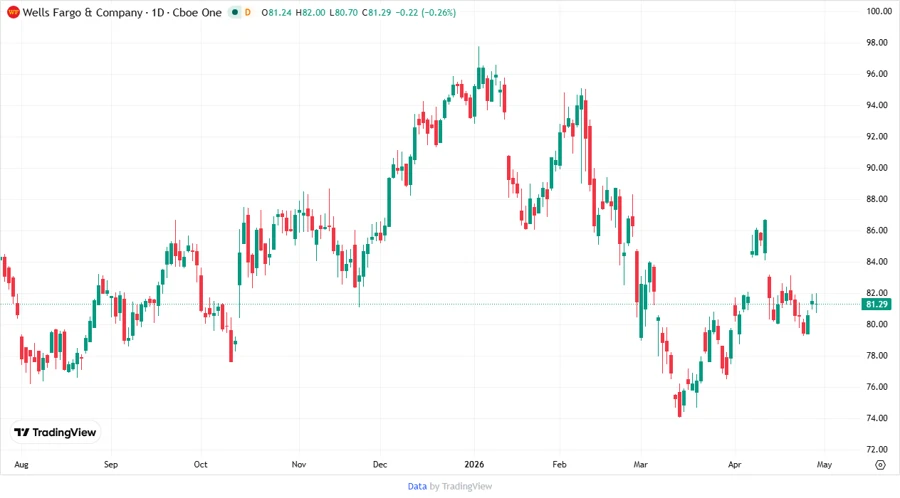
WFC: Fundamental Ratio Analysis - Wells Fargo & Company
Wells Fargo & Company, operating in diversified financial services, has shown a resilient performance amidst challenging economic conditions. The company's stable ratings in varied financial metrics reflect a balanced approach towards revenue streams in both consumer and corporate banking segments. With opportunities in diversified sectors, Wells Fargo continues to hold a solid position in the market.
Fundamental Rating
The fundamental data of Wells Fargo demonstrates a moderate performance across different metrics. Below is the detailed score analysis:
| Category | Score | Score Bar |
|---|---|---|
| Overall Rating | B- | |
| Discounted Cash Flow | 1 | |
| Return on Equity | 4 | |
| Return on Assets | 4 | |
| Debt to Equity | 1 | |
| Price to Earnings | 3 | |
| Price to Book | 2 |
Historical Rating
Several core metrics of Wells Fargo have shown a consistent trend over time, indicating stability in the company's financial health:
| Date | Overall | DCF | ROE | ROA | Debt/Equity | P/E | P/B |
|---|---|---|---|---|---|---|---|
| 2026-04-29 | 3 | 1 | 4 | 4 | 1 | 3 | 2 |
| (Historical) | 0 | 1 | 4 | 4 | 1 | 3 | 2 |
Analyst Price Targets
Analysts’ price targets indicate a cautious optimism about Wells Fargo’s future with a preference for holding in the current market scenario:
| High | Low | Median | Consensus |
|---|---|---|---|
| $113 | $74 | $99.5 | $98.13 |
Analyst Sentiment
The sentiment around Wells Fargo stock among analysts shows a mixed perspective, calling for prudence in investment decisions:
| Rating | Count | Distribution |
|---|---|---|
| Strong Buy | 0 | |
| Buy | 27 | |
| Hold | 29 | |
| Sell | 4 | |
| Strong Sell | 0 |
In conclusion, Wells Fargo & Company remains a key player in the financial services sector with steady financial metrics, although challenges in the macroeconomic environment may influence near-term performance. The company's diverse range of services across banking and investment segments provides resilience against market volatility. Investment decisions should consider the mixed analyst sentiment and cautious price targets. While opportunities for growth exist, particularly within emerging market sectors, investors should also be wary of potential risks including regulatory changes and economic downturns.