
September 18, 2025 a 04:04 am
WEC: Trend and Support & Resistance Analysis - WEC Energy Group, Inc.
WEC Energy Group, Inc. has shown a robust performance by navigating the fluctuating energy markets. The company's diversified energy sources contribute to its enduring strength despite economic fluctuations. However, external market factors and regulatory landscapes remain critical considerations for stakeholders. As the energy sector continues to evolve, WEC’s solid infrastructure and strategic outlook provide a credible foundation. Investors should keenly observe shifts in energy policy that could influence WEC's longer-term growth prospects.
Trend Analysis
| Date | Close Price | Trend |
|---|---|---|
| 2025-09-17 | 109.26 | ▲ |
| 2025-09-16 | 108.69 | ▲ |
| 2025-09-15 | 110.97 | ▲ |
| 2025-09-12 | 110.52 | ▲ |
| 2025-09-11 | 109.72 | ▲ |
| 2025-09-10 | 109.39 | ▲ |
| 2025-09-09 | 107.56 | ▲ |
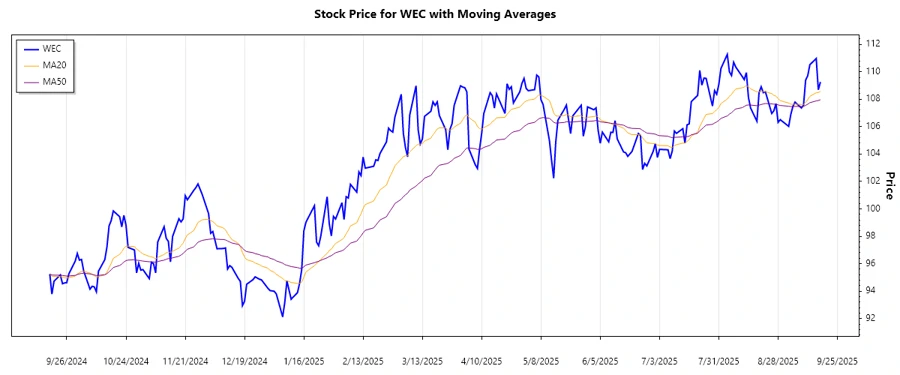
In a bullish market, WEC's stocks have started to gain momentum as illustrated by the upward trend in the closing prices along with EMA20 stating above EMA50 indicating an overall rising trend phase.
Support and Resistance
| Zone Type | From | To |
|---|---|---|
| Support | 107.00 | 108.00 |
| Support | 105.00 | 106.00 |
| Resistance | 111.00 | 112.00 |
| Resistance | 113.00 | 114.00 |
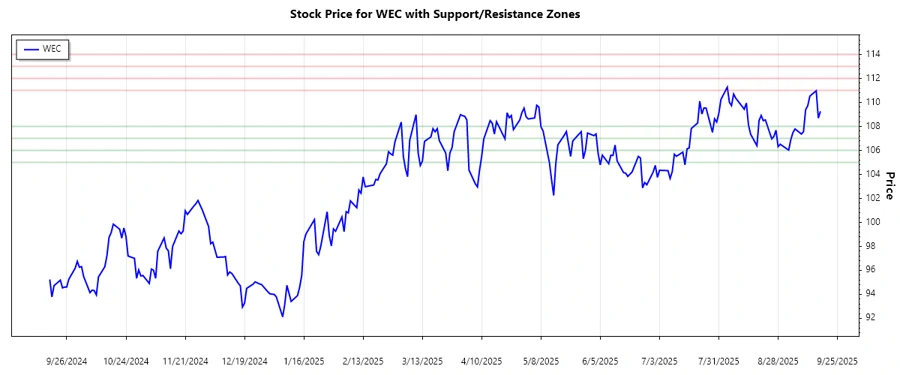
Currently, WEC stock is moving within the support zone, specifically between $107.00 and $108.00, indicating a potential pivot point for continued upward momentum.
Conclusion
The WEC Energy Group presents a bullish outlook with a recent uptrend, making it an appealing prospect for investors seeking growth within the energy sector. The company’s strong infrastructure and diversified energy portfolio provide resilience against market volatility. However, regulatory challenges and evolving energy policies could alter this favorable trajectory. Additionally, given its current proximate position to support zones, traders should expect potential price appreciation. As market dynamics evolve, the performance insights of WEC accentuate key opportunities balanced by inherent risks typical of energy sectors.
Smart Data Insight
Master the Perfect Entry & Exit for this Stock
Don't leave your profits to chance. Historically, this stock follows specific seasonal patterns that institutional traders use to maximize returns.
- ✅ Identify the "Golden Buying Window"
- ✅ Avoid high-risk correction cycles
- ✅ Backtested data from the last 20+ years