
April 14, 2026 a 05:15 am
TSLA: Fibonacci Analysis - Tesla, Inc.
Tesla, Inc. continues to be a pivotal company within the electric vehicle and renewable energy sectors. Its stock, symbol TSLA, showcases volatility that reflects both market trends and technological innovation. Investors keenly follow its movements, aware of the strategic decisions affecting the automotive and energy segments. Recent stock movements suggest key levels to watch for potential support and resistance in ongoing trading sessions.
Fibonacci Analysis
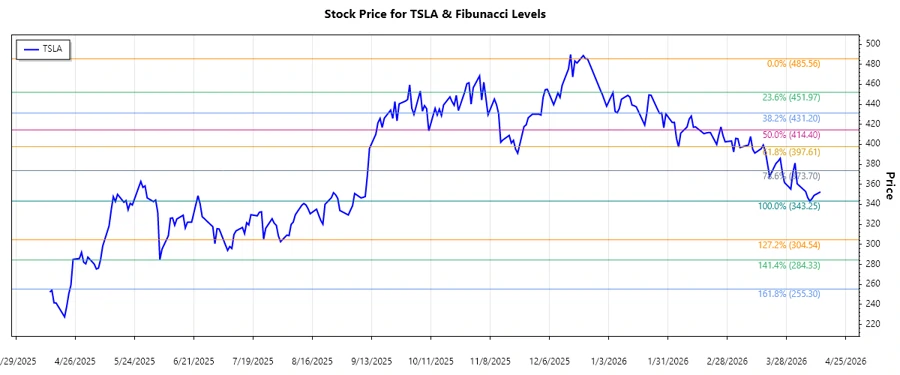
Analysis of TSLA shows a downward trend from December 2025 through April 2026, reaching a low in early April 2026. The stock price fluctuated from a high of 485.56 on December 23, 2025, to a low of 343.25 on April 8, 2026. Based on this trend, Fibonacci retracement levels are calculated as follows:
| Details | Values |
|---|---|
| Start Date | 2025-12-23 |
| End Date | 2026-04-08 |
| High Point (Date & Price) | 2025-12-23, 485.56 |
| Low Point (Date & Price) | 2026-04-08, 343.25 |
| Fibonacci Level | Price Level |
|---|---|
| 0.236 | 435.66 |
| 0.382 | 450.06 |
| 0.5 | 464.41 |
| 0.618 | 478.76 |
| 0.786 | 497.52 |
The current price floats around 352.42, indicating it has moved below all primary retracement levels, suggesting possible further downside or a critical area to watch for potential support at these levels.
Technically, breaking below these levels could indicate bearish sentiment, possibly extending the downtrend if no support is found.
Conclusion
The analysis confirms that TSLA remains in a precarious position within the identified downward trend. While the significant retracement levels provide potential support or resistance lines, current prices suggest increased volatility. If TSLA manages to sustain or recover above any retracement level, it could indicate a short-term reversal or stability. However, if the downward momentum continues beyond these thresholds, it increases the potential for further declines, posing risks for existing holders and opportunities for potential short positions. Analysts should remain attentive to market cues this earning season.