
May 02, 2026 a 06:44 am
SHW: Fibonacci Analysis - The Sherwin-Williams Company
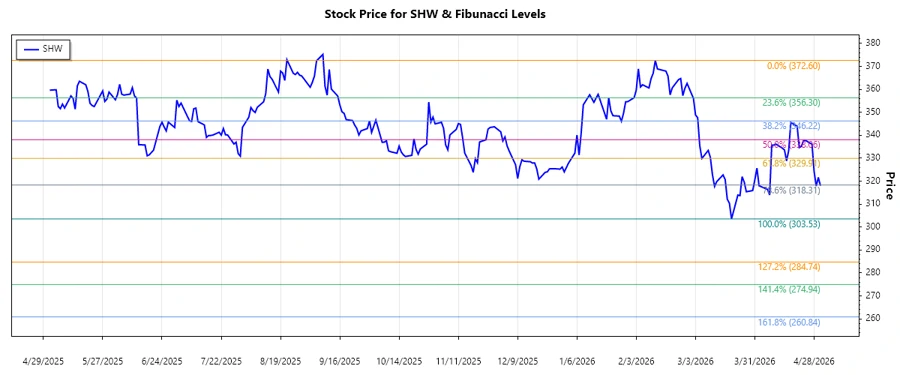
The Sherwin-Williams Company (SHW) exhibits a robust business model with a diversified portfolio in the paints and coatings industry. Recently, the stock has shown signs of an overall declining trend. This analysis will focus on the latest significant price movements and explore potential retracement levels using the Fibonacci method. Investors should be aware of critical support and resistance levels as the stock aims to stabilize.
Fibonacci Analysis
| Analysis Details | Values |
|---|---|
| Start Date | 2025-12-11 |
| End Date | 2026-05-01 |
| High Price | $372.6 (2025-12-11) |
| Low Price | $303.53 (2026-03-20) |
| Fibonacci Level | Price Level |
|---|---|
| 0.236 | $339.35 |
| 0.382 | $350.22 |
| 0.5 | $356.07 |
| 0.618 | $361.92 |
| 0.786 | $370.14 |
The current price of $318 is within the 0.236 Fibonacci retracement range, indicating a potential area of support. Should the price maintain this level, it might give a bullish signal. However, if it breaks below this level, further downside could follow.
Conclusion
The Sherwin-Williams Company is currently navigating a moderately declining trend, with significant Fibonacci levels suggesting potential resistance and support areas. Trading at the 0.236 Fibonacci level might indicate a possible support point, but caution is advised due to bearish momentum dominating short-term trends. Prospective investors should closely monitor these levels, as breaching them could signal extended moves in the same direction. While long-term growth prospects remain positive, short-term volatility requires careful consideration.
Smart Data Insight
Master the Perfect Entry & Exit for this Stock
Don't leave your profits to chance. Historically, this stock follows specific seasonal patterns that institutional traders use to maximize returns.
- ✅ Identify the "Golden Buying Window"
- ✅ Avoid high-risk correction cycles
- ✅ Backtested data from the last 20+ years