
March 12, 2026 a 03:15 am

QCOM: Trend and Support & Resistance Analysis - QUALCOMM Incorporated
QUALCOMM Incorporated, a notable entity in wireless technology, has a diverse business environment. With a strong market position and evolving technology offerings, QCOM is a solid player in the wireless industry. The stock's performance and technical indicators are crucial for investors aiming to understand recent price movements and future trends.
Trend Analysis
The analysis of QUALCOMM's stock shows a historical shift in price trends over the recent months. Calculations of EMA20 and EMA50 provide insights into these trends, indicating a clear descent in stock value. Below are the calculated data for the latest 7 days:
| Date | Closing Price | Trend |
|---|---|---|
| 2026-03-11 | 134.12 | ▼ 134.12 |
| 2026-03-10 | 135.20 | ▼ 135.20 |
| 2026-03-09 | 138.11 | ▲ 138.11 |
| 2026-03-06 | 135.69 | ▼ 135.69 |
| 2026-03-05 | 137.00 | ▲ 137.00 |
| 2026-03-04 | 139.51 | ▲ 139.51 |
| 2026-03-03 | 138.13 | ▲ 138.13 |
From the above, a negative trend is evident as EMA50 surpasses EMA20. This suggests a prevailing bearish sentiment. The stock's decrease may raise caution for short-term investors.
Support- and Resistance
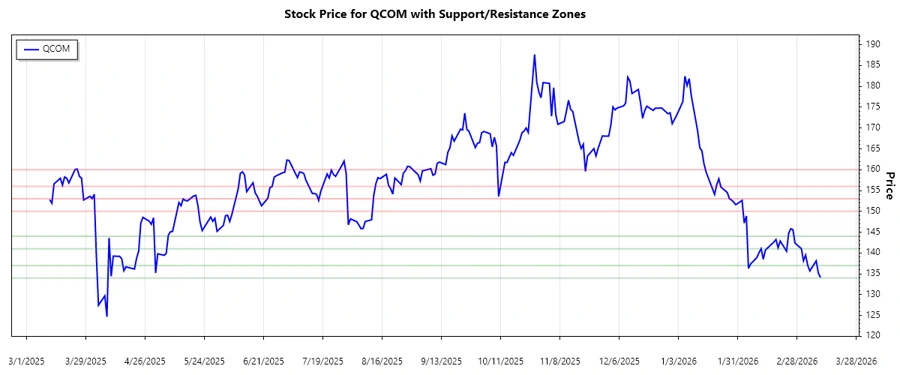
The identification of support and resistance zones is crucial for making informed trading decisions. Analyzing the closing prices has revealed the following zones:
| Zone Type | Price Range |
|---|---|
| Support Zone 1 | ▼ 134.00 - 137.00 |
| Support Zone 2 | ▼ 141.00 - 144.00 |
| Resistance Zone 1 | ▲ 150.00 - 153.00 |
| Resistance Zone 2 | ▲ 156.00 - 160.00 |
Currently, the stock price is approaching the lower end of Support Zone 1, indicating a potential rebound point. This may suggest support at these levels unless breached, in which case the next lower support should be considered.
Conclusion
QUALCOMM Incorporated's stock has shown a bearish trend, with short-term moving averages suggesting further caution. The stock price approaches critical support zones, offering potential rebound opportunities or further declines. Investors should weigh the risks of continued downward pressure against potential recovery within defined zones. The combination of technical signals and company fundamentals should guide investment decisions.