
May 12, 2026 a 03:15 am
POOL: Trend and Support & Resistance Analysis - Pool Corporation
Pool Corporation, a key player in distributing swimming pool supplies and related products, exhibits a varied trend in its stock prices. With fluctuations influenced by broader market dynamics and niche industry demands, the company's stock offers potential to tap into summer renovation booms and global expansion opportunities. However, competition and economic volatilities remain critical factors in assessing its stock performance.
Trend Analysis
| Date | Close Price | Trend |
|---|---|---|
| 2026-05-11 | 184.77 | ▼ Bearish |
| 2026-05-08 | 187.77 | ▼ Bearish |
| 2026-05-07 | 190.44 | ▼ Bearish |
| 2026-05-06 | 188.09 | ▼ Bearish |
| 2026-05-05 | 187.04 | ▼ Bearish |
| 2026-05-04 | 203.23 | ▲ Bullish |
| 2026-05-01 | 208.09 | ▲ Bullish |
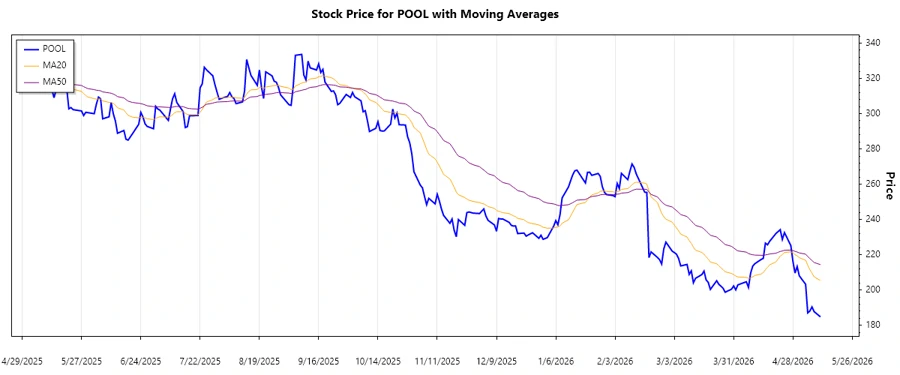
Based on the EMA calculations, the stock is indicating a dominant bearish trend. The recent recovery attempts face sell-side pressure, keeping the bears in control.
Support and Resistance
| Level | Price Range |
|---|---|
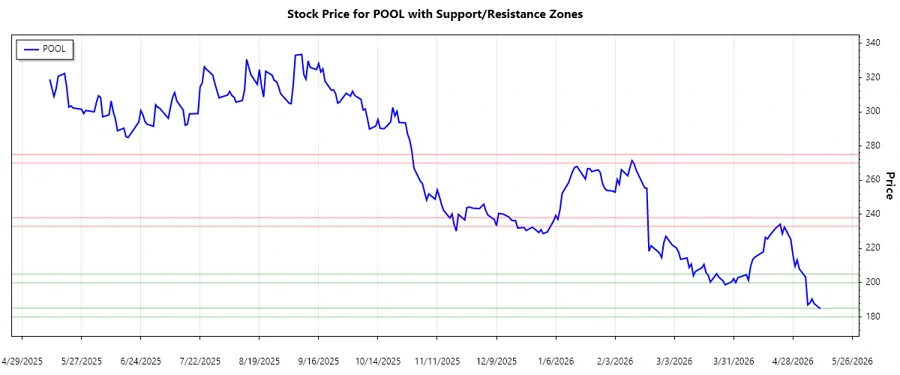
| Resistance Zone 1 | ▲ 233.0 - 238.0 |
| Resistance Zone 2 | ▲ 270.0 - 275.0 |
| Support Zone 1 | ▼ 180.0 - 185.0 |
| Support Zone 2 | ▼ 200.0 - 205.0 |
The current price hovers near the lower support zone, suggesting the stock might see a rebound if buying interest increases. Conversely, a breach below may yield further downside.
Conclusion
The Pool Corporation stock shows volatility with the present bearish trend pressuring the market. Yet, its strategic positioning in the leisure sector provides attractive recovery potential once market sentiment and economic conditions improve. The support zones provide potential buying opportunities, whereas overcoming resistance zones could attract bullish attention. Analysts should closely monitor external economic signals and industry trends to gauge timing for entry or exit points effectively.
This analysis incorporated data interpretation to determine the trends, calculated EMAs, identified support and resistance levels, and their implications in the current market dynamics for Pool Corporation.
Smart Data Insight
Master the Perfect Entry & Exit for this Stock
Don't leave your profits to chance. Historically, this stock follows specific seasonal patterns that institutional traders use to maximize returns.
- ✅ Identify the "Golden Buying Window"
- ✅ Avoid high-risk correction cycles
- ✅ Backtested data from the last 20+ years