
May 13, 2026 a 04:03 am
PHM: Trend and Support & Resistance Analysis - PulteGroup, Inc.
PulteGroup, Inc. (PHM) has seen substantial fluctuation in its stock prices driven by market volatilities and investor sentiments. Recent data analysis indicates a shift in trend direction, suggesting potential trading opportunities. As we dissect the historical data, it's crucial to evaluate both moving averages and support/resistance levels to forecast potential price movements.
Trend Analysis
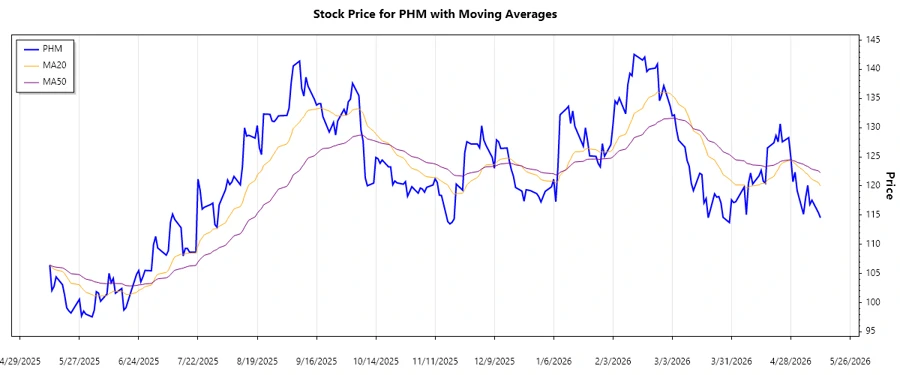
The analysis of the historical closing prices indicates variations in market trends. By examining the EMA20 and EMA50, a clearer picture of the current trend emerges. For the last observed days:
| Date | Close Price | Trend |
|---|---|---|
| 2026-05-12 | $114.55 | ▼ |
| 2026-05-11 | $115.45 | ▼ |
| 2026-05-08 | $117.55 | ▼ |
| 2026-05-07 | $116.82 | ▼ |
| 2026-05-06 | $120.10 | ▲ |
| 2026-05-05 | $117.97 | ▲ |
| 2026-05-04 | $115.15 | ▼ |
The EMA20 has dipped below EMA50, indicating a ▼ downtrend in recent days. This technical signal suggests that bearish forces might be currently more dominant.
Support and Resistance
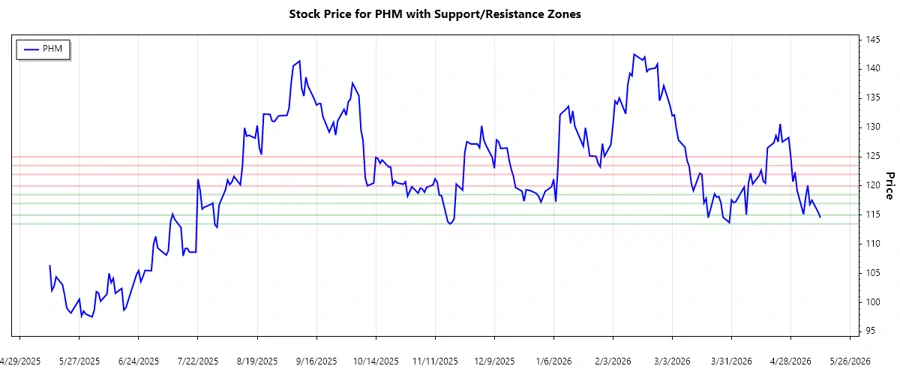
Assessing the historical data, we've identified pivotal support and resistance levels affecting PHM's stock:
| Type | Zone From | Zone To | Direction |
|---|---|---|---|
| Support Zone 1 | $113.5 | $115.0 | ▲ |
| Support Zone 2 | $117.0 | $118.5 | ▲ |
| Resistance Zone 1 | $120.0 | $122.0 | ▼ |
| Resistance Zone 2 | $123.5 | $125.0 | ▼ |
Currently, the stock price is closer to the first support zone. If the market sentiment swings positively, we might see a bounce back upwards.
Conclusion
The current analysis of PulteGroup, Inc. (PHM) presents a cautious outlook amidst a technically indicated downtrend. While recent movements are near major support zones, the potential downside risk remains if broader market conditions deteriorate. For investors, close observation of the support/resistance levels is advised. Traders might consider using these levels as potential entry/exit points in anticipation of possible reversals or confirmations of the existing trend.
Smart Data Insight
Master the Perfect Entry & Exit for this Stock
Don't leave your profits to chance. Historically, this stock follows specific seasonal patterns that institutional traders use to maximize returns.
- ✅ Identify the "Golden Buying Window"
- ✅ Avoid high-risk correction cycles
- ✅ Backtested data from the last 20+ years