
July 03, 2026 a 04:44 pm

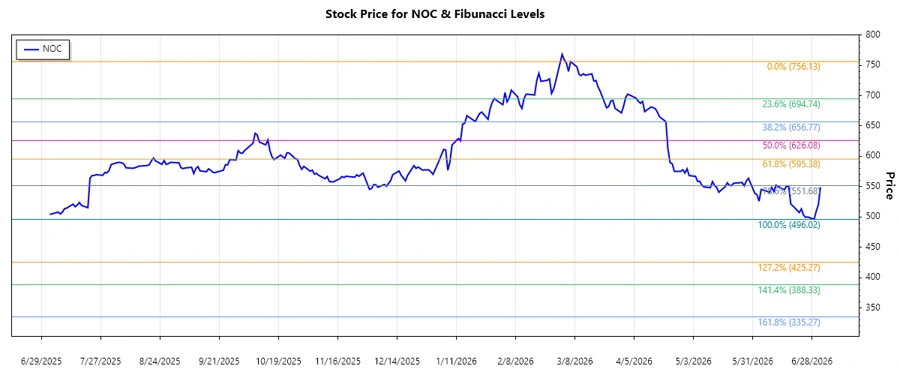
NOC: Fibonacci Analysis - Northrop Grumman Corporation
The Northrop Grumman Corporation, a prominent entity in the aerospace and defense sectors, presents an intriguing stock opportunity with its diverse and extensive product portfolio. Analyzing the recent market trends, particularly the prevailing downturn, can be crucial for making informed investment decisions. Understanding retracement levels via Fibonacci analysis can guide us in predicting potential reversal points and support levels.
Fibonacci Analysis
The analysis of historical stock price data for Northrop Grumman Corporation indicates a dominant downward trend. The trend begins from a high of $756.13 on 2026-03-06, declining to a low of $496.02 on 2026-06-29. This period offers an ideal framework for applying the Fibonacci Retracement technique. The key calculations and findings are summarized below:
| Period | High | Low |
|---|---|---|
| 2026-03-06 to 2026-06-29 | $756.13 (2026-03-06) | $496.02 (2026-06-29) |
| Fibonacci Level | Price Level |
|---|---|
| 0.236 | $563.76 |
| 0.382 | $627.26 |
| 0.5 | $626.08 |
| 0.618 | $658.91 |
| 0.786 | $706.43 |
The current stock price at $549.01 places it just below the 0.236 retracement level. This could imply that the market may find minor support at this level but could test lower levels if the downward pressure persists. Therefore, traders should consider carefully watching this zone for potential reversal signs.
Conclusion
The ongoing downward trend in Northrop Grumman's stock price signals potential areas of resistance as indicated by the Fibonacci retracement levels. While the stock currently rests below the 0.236 level, investors should be cautious yet vigilant for any signs of a trend reversal. These retracement levels suggest potential barriers that might inhibit further downside movement, providing potential buying opportunities if the market shows signs of support. However, geopolitical dynamics and sector performance could further sway these technical indications, and thus continuous monitoring is recommended for sound investment decisions.
Smart Data Insight
Master the Perfect Entry & Exit for this Stock
Don't leave your profits to chance. Historically, this stock follows specific seasonal patterns that institutional traders use to maximize returns.
- ✅ Identify the "Golden Buying Window"
- ✅ Avoid high-risk correction cycles
- ✅ Backtested data from the last 20+ years