
November 18, 2025 a 03:31 am

KHC: Dividend Analysis - The Kraft Heinz Company
The Kraft Heinz Company has been a mainstay in the consumer goods sector, offering a high dividend yield which appeals to income-focused investors. With a current yield of 6.53%, it presents an attractive income stream, though investors should consider its recent history of dividend cuts. Careful examination is necessary given its past financial struggles and stabilization efforts.
📊 Overview
The Kraft Heinz Company operates within the consumer goods sector. Known for its high dividend yield, currently at 6.53%, it offers a dividend per share of $1.60 to shareholders. Despite having a solid history of 14 years paying dividends, the company last saw a reduction in 2019.
| Factor | Data |
|---|---|
| Sector | Consumer Goods |
| Dividend Yield | 6.53% |
| Current Dividend Per Share | 1.60 USD |
| Dividend History | 14 years |
| Last Cut or Suspension | 2019 |
📈 Dividend History
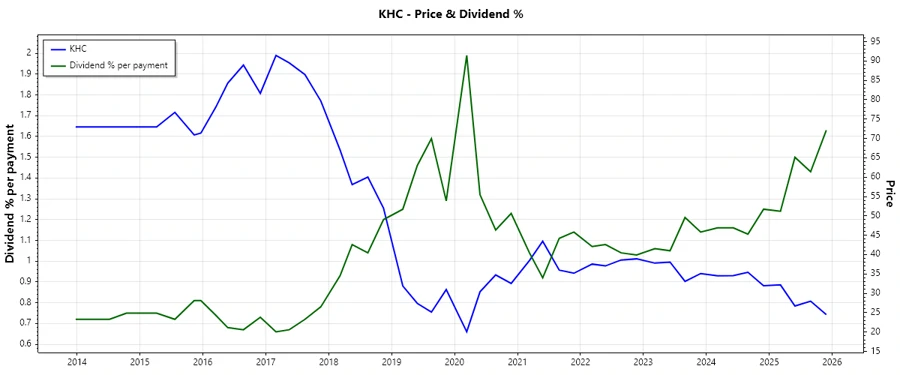
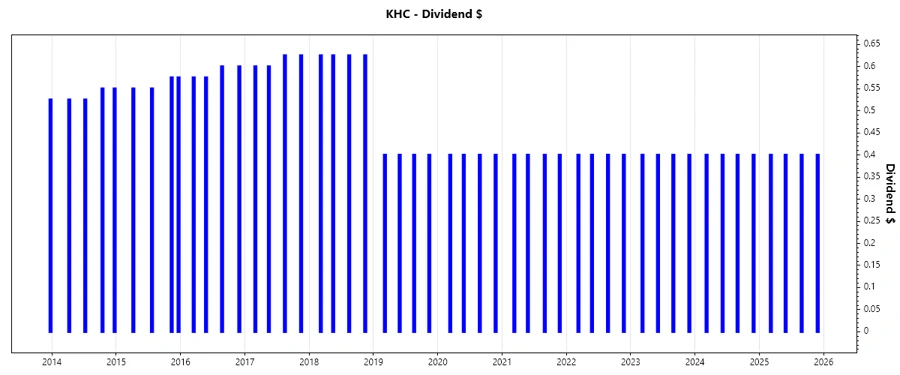
The dividend history showcases the consistency and stability or volatility of dividends over time, which is crucial for income reliability.
| Year | Dividend Per Share (USD) |
|---|---|
| 2025 | 1.60 |
| 2024 | 1.60 |
| 2023 | 1.60 |
| 2022 | 1.60 |
| 2021 | 1.60 |
🗣️ Dividend Growth
Understanding dividend growth is vital as it reflects the company's commitment to returning profits to shareholders through increasing payouts.
| Time | Growth |
|---|---|
| 3 years | 0% |
| 5 years | 0% |
The average dividend growth is 0% over 5 years, indicating stagnation in dividend increases, a concern for growth-oriented investors.
💡 Payout Ratio
Payout ratios help assess sustainability of dividends. EPS-based payout ratio is -43.23%, while free cash flow-based ratio stands at 52.02%.
| Key Figure | Ratio |
|---|---|
| EPS-based | -43.23% |
| Free Cash Flow-based | 52.02% |
While a negative EPS-based ratio is concerning, the FCF-based ratio shows the dividend is still manageable from a cash perspective.
✅ Cashflow & Capital Efficiency
Understanding cash flow and capital efficiency ensures that the company can cover its capital needs and sustain operational costs.
| Year | 2024 | 2023 | 2022 |
|---|---|---|---|
| Free Cash Flow Yield | 8.51% | 6.53% | 3.11% |
| Earnings Yield | 7.39% | 6.29% | 4.73% |
| CAPEX to Operating Cash Flow | 24.47% | 25.48% | 37.10% |
| Stock-based Compensation to Revenue | 0.42% | 0.53% | 0.56% |
| Free Cash Flow / Operating Cash Flow Ratio | 75.53% | 74.52% | 62.90% |
Efficient cash flow management and capital expenditures signal operational resilience and effective use of capital assets.
⚠️ Balance Sheet & Leverage Analysis
A solid balance sheet and manageable leverage indicate financial stability, crucial for sustaining long-term dividend payments.
| Year | 2024 | 2023 | 2022 |
|---|---|---|---|
| Debt-to-Equity | 40.40% | 40.45% | 41.23% |
| Debt-to-Assets | 22.51% | 22.17% | 22.17% |
| Debt-to-Capital | 28.77% | 28.80% | 29.19% |
| Net Debt to EBITDA | 6.82 | 3.38 | 3.95 |
| Current Ratio | 1.13 | — | — |
| Quick Ratio | 0.59 | 0.54 | 0.47 |
| Financial Leverage | 1.79 | 1.82 | 1.86 |
The company's leverage is manageable, but the high Net Debt to EBITDA deserves cautious monitoring.
📐 Fundamental Strength & Profitability
Evaluating profitability ratios provides insights into operational efficiency and the firm’s ability to convert revenues into profits.
| Year | 2024 | 2023 | 2022 |
|---|---|---|---|
| Return on Equity | 5.58% | 5.76% | 4.85% |
| Return on Assets | 3.11% | 3.16% | 2.61% |
| Margins (Net, EBIT, EBITDA, Gross) | 10.62% / 6.84% / 10.51% / 34.70% | 10.72% / 17.06% / 20.67% / 33.51% | 8.92% / 14.68% / 18.20% / 30.67% |
| R&D to Revenue | 0% | 0.55% | 0% |
The company shows steady profitability, although the lack of R&D investment might impact future growth prospects.
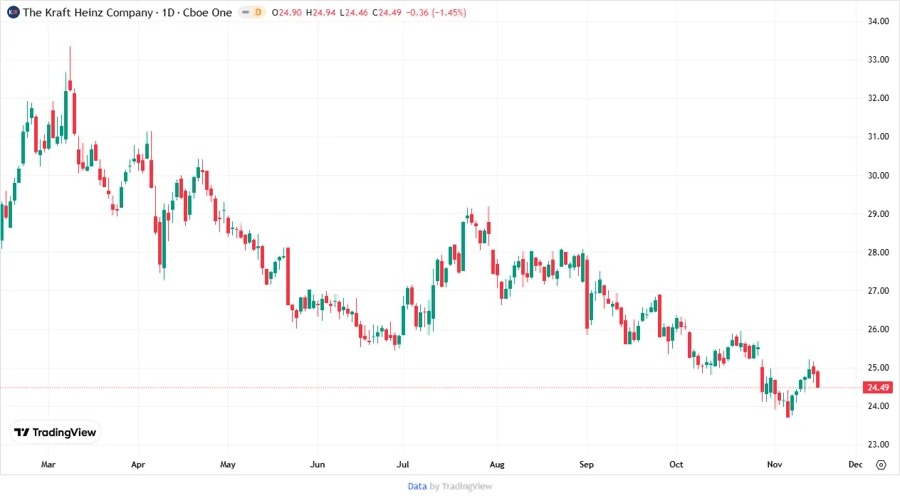
📉 Price Development
🔍 Dividend Scoring System
| Criteria | Rating (1-5) | Score |
|---|---|---|
| Dividend Yield | 4 | |
| Dividend Stability | 3 | |
| Dividend Growth | 1 | |
| Payout Ratio | 2 | |
| Financial Stability | 2 | |
| Dividend Continuity | 3 | |
| Cashflow Coverage | 3 | |
| Balance Sheet Quality | 3 |
Total Score: 21/40
🏆 Rating
The Kraft Heinz Company offers a high dividend yield, though its growth prospects appear limited. Investors seeking income may find this appealing, but those prioritizing growth and stability should be cautious. The dividend stability is moderate, but continuous monitoring of its financial performance is advised due to past dividend cuts and financial challenges.
Smart Data Insight
Master the Perfect Entry & Exit for this Stock
Don't leave your profits to chance. Historically, this stock follows specific seasonal patterns that institutional traders use to maximize returns.
- ✅ Identify the "Golden Buying Window"
- ✅ Avoid high-risk correction cycles
- ✅ Backtested data from the last 20+ years