
June 06, 2026 a 01:00 pm
HPE: Fundamental Ratio Analysis - Hewlett Packard Enterprise Company
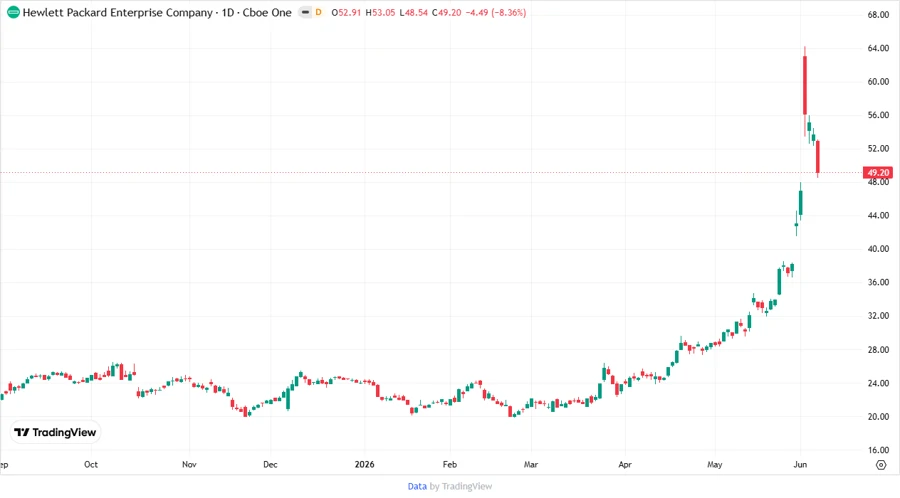
Hewlett Packard Enterprise Company, known for its robust technological solutions, continues to demonstrate solid growth potential in the tech industry. The company's diverse portfolio caters to various sectors across the globe, positioning itself as a formidable player in the market. Investors should consider the stock's performance trajectory and market trends.
Fundamental Rating
HPE's fundamental analysis reveals a stable performance with consistent scores across key financial ratios.
| Category | Score | Visualization |
|---|---|---|
| Discounted Cash Flow | 3 | |
| Return on Equity | 3 | |
| Return on Assets | 3 | |
| Debt to Equity | 1 | |
| Price to Earnings | 2 | |
| Price to Book | 4 |
Historical Rating
The historical performance shows consistency in key financial ratios, indicative of steady management approaches.
| Date | Overall Score | DCF | ROE | ROA | D/E | P/E | P/B |
|---|---|---|---|---|---|---|---|
| N/A | 0 | 3 | 3 | 3 | 1 | 2 | 4 |
| 2026-06-05 | 3 | 3 | 3 | 3 | 1 | 2 | 4 |
Analyst Price Targets
Analyst estimates suggest a stable price range with a median target that aligns closely with the consensus view.
| High | Low | Median | Consensus |
|---|---|---|---|
| 80 | 62 | 69 | 69.27 |
Analyst Sentiments
Current analyst sentiments indicate a neutral perspective, with a majority skewed towards 'Hold'.
| Recommendation | Count | Distribution |
|---|---|---|
| Strong Buy | 0 | |
| Buy | 18 | |
| Hold | 20 | |
| Sell | 1 | |
| Strong Sell | 0 |
Conclusion
Hewlett Packard Enterprise Company exhibits a stable financial standing with consistent scores in fundamental ratios, indicating steady management and financial strategy. Despite the slight concern with debt to equity ratio, the company's diverse technological portfolio and global presence provide a solid foundation for potential growth. Analyst perspectives reflect a balanced view, predominantly recommending 'Hold', underlining cautious optimism. It is imperative for investors to maintain vigilance regarding industry trends and technological advancements impacting the sector.
Smart Data Insight
Master the Perfect Entry & Exit for this Stock
Don't leave your profits to chance. Historically, this stock follows specific seasonal patterns that institutional traders use to maximize returns.
- ✅ Identify the "Golden Buying Window"
- ✅ Avoid high-risk correction cycles
- ✅ Backtested data from the last 20+ years