
April 26, 2026 a 01:00 pm

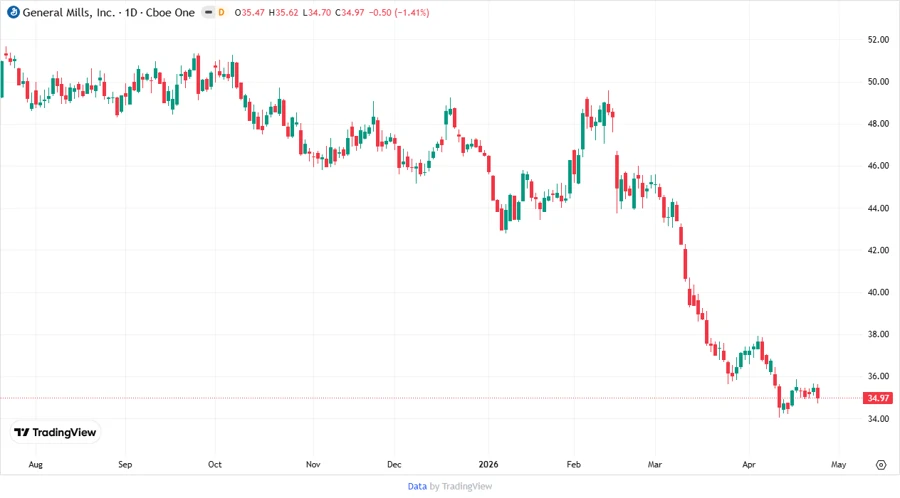
GIS: Fundamental Ratio Analysis - General Mills, Inc.
General Mills, Inc. holds a solid position in the consumer foods market with a diverse product range and a robust global presence. The company's stable fundamentals are reflected in its rating, though the debt level requires careful monitoring.
Fundamental Rating
The company's fundamentals are strong, highlighted by impressive returns and a favorable price-to-earnings ratio. However, the debt-to-equity ratio merits attention.
| Category | Score | Visual |
|---|---|---|
| Discounted Cash Flow | 5 | |
| Return on Equity | 5 | |
| Return on Assets | 5 | |
| Debt to Equity | 1 | |
| Price to Earnings | 4 | |
| Price to Book | 2 |
Historical Rating
The historical ratings show stability in financial metrics, but the overall score has room for improvement.
| Date | Overall | DCF | ROE | ROA | Debt to Equity | P/E | P/B |
|---|---|---|---|---|---|---|---|
| 2026-04-24 | 4 | 5 | 5 | 5 | 1 | 4 | 2 |
| Previous | 0 | 5 | 5 | 5 | 1 | 4 | 2 |
Analyst Price Targets
Price targets suggest a mixed outlook, with the consensus at a moderate price level.
| High | Low | Median | Consensus |
|---|---|---|---|
| 63 | 35 | 46.5 | 46.58 |
Analyst Sentiments
While the majority recommendation is to hold, some analysts suggest buying.
| Recommendation | Count | Distribution |
|---|---|---|
| Strong Buy | 0 | |
| Buy | 9 | |
| Hold | 19 | |
| Sell | 6 | |
| Strong Sell | 0 |
Conclusion
General Mills, Inc. demonstrates resilience with strong fundamental ratings and a stable market position in the consumer foods sector. Despite the solid performance metrics, the debt-to-equity ratio remains a concern. The majority of analysts suggest holding the stock, reflecting a cautious but positive market sentiment. Future growth may hinge on tackling debt and leveraging its diverse product lineup to capture emerging markets. Overall, maintaining a balanced portfolio approach could be prudent for investors.
Smart Data Insight
Master the Perfect Entry & Exit for this Stock
Don't leave your profits to chance. Historically, this stock follows specific seasonal patterns that institutional traders use to maximize returns.
- ✅ Identify the "Golden Buying Window"
- ✅ Avoid high-risk correction cycles
- ✅ Backtested data from the last 20+ years