
February 21, 2026 a 04:28 am

GBPUSD: Trend and Support & Resistance Analysis
The GBPUSD currency pair has experienced fluctuating trends over the analyzed period, with recent data suggesting potential volatility. Technical indicators point towards discernible patterns that traders may capitalize on, although caution is advised due to possible external factors influencing the exchange rate. Understanding the underlying trend and significant support and resistance levels can assist traders in making informed decisions.
Trend Analysis
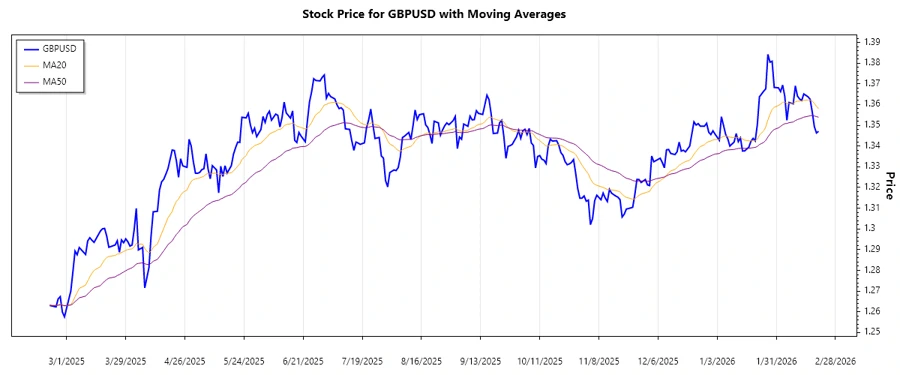
The recent price movements of the GBPUSD pair suggest nuanced trends observed across different timelines. By calculating the Exponential Moving Averages (EMA) for 20 and 50 days, we can gain insights into the prevailing trend. If EMA20 exceeds EMA50, we expect an uptrend (▲); conversely, if EMA20 is below EMA50, it indicates a downtrend (▼). A scenario where EMA20 closely aligns with EMA50 suggests a sideways trend (⚖️).
| Date | Closing Price | Trend |
|---|---|---|
| 2026-02-20 | 1.3471 | ▼ |
| 2026-02-19 | 1.3463 | ▼ |
| 2026-02-18 | 1.3493 | ▼ |
| 2026-02-17 | 1.3564 | ▲ |
| 2026-02-16 | 1.3626 | ▲ |
| 2026-02-15 | 1.3638 | ▲ |
| 2026-02-13 | 1.3651 | ▲ |
The current scenario highlights a partial uptrend following recent declines, suggesting short-term bullishness mitigated by an overarching bearish sentiment.
Support and Resistance
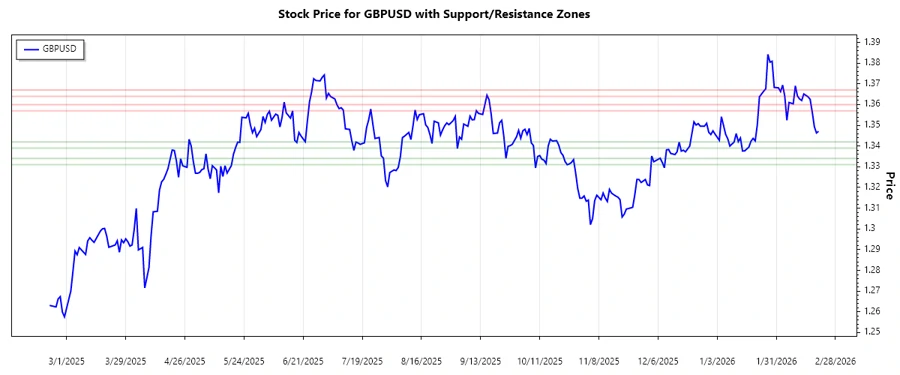
Identifying key support and resistance levels can offer traders significant advantages. Support zones are potential areas where the price could encounter a floor, whereas resistance zones indicate potential ceilings.
| Zone Type | From | To |
|---|---|---|
| Support 1 | 1.3390 | 1.3420 |
| Support 2 | 1.3310 | 1.3340 |
| Resistance 1 | 1.3570 | 1.3600 |
| Resistance 2 | 1.3640 | 1.3670 |
The GBPUSD pair is currently maneuvering between established zones, offering potential trading opportunities should the price breach either barrier.
Conclusion
The GBPUSD currency pair shows potential areas for investment with identifiable support and resistance levels offering trade opportunities. However, traders must remain vigilant of potential market disruptions and adjust strategies to mitigate risk. Aligning technical analysis with macroeconomic factors could yield comprehensive insights, driving more informed trading decisions.