
September 25, 2026 a 03:31 pm


EU Countries - Performance Analysis
Over recent weeks and months, European markets have demonstrated varied performance levels across different countries. As various economic factors and geopolitical tensions continue to evolve, these movements provide insight into the relative strengths and weaknesses of each nation's financial stability and investor sentiment. Below is an analytical summary of the weekly, monthly, and quarterly performances of key European countries to help pinpoint trends and inform investment decisions.
EU Countries Performance One Week
| Country | Performance (%) | Performance |
|---|---|---|
| Poland | 0.76 | |
| Spain | 0.36 | |
| France | 0.05 | |
| Great Britain | 0.0 | |
| Swiss | 0.0 | |
| German | -0.66 |
EU Countries Performance One Month
| Country | Performance (%) | Performance |
|---|---|---|
| Poland | 0.15 | |
| Great Britain | 0.0 | |
| Swiss | 0.0 | |
| Spain | -3.29 | |
| German | -5.87 | |
| France | -6.84 |
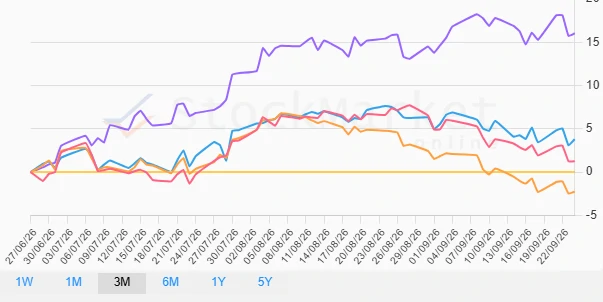
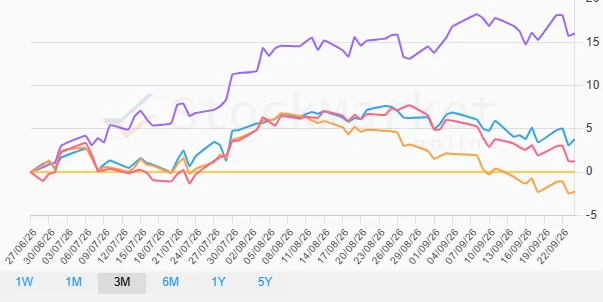
EU Countries Performance Three Months
| Country | Performance (%) | Performance |
|---|---|---|
| Poland | 16.04 | |
| Spain | 3.80 | |
| German | 1.27 | |
| Great Britain | 0.0 | |
| Swiss | 0.0 | |
| France | -2.26 |
Summary
In conclusion, Poland stands out as the most consistent performer across the analyzed time frames, demonstrating resilience in both short and long terms. Conversely, France and Germany have faced significant challenges, particularly in the one-month analysis. These insights point to potential investment opportunities in countries like Poland while urging caution with underperformers such as France. Investors should consider these trends alongside broader economic indicators and geopolitical developments when making future decisions.
Smart Data Insight
Master the Perfect Entry & Exit for this Stock
Don't leave your profits to chance. Historically, this stock follows specific seasonal patterns that institutional traders use to maximize returns.
- ✅ Identify the "Golden Buying Window"
- ✅ Avoid high-risk correction cycles
- ✅ Backtested data from the last 20+ years