
June 19, 2026 a 03:31 pm


EU Countries - Performance Analysis
📊 Analyzing the recent performance trends of European countries reveals intriguing patterns of volatility and growth. This comprehensive overview covers three key periods: 1 week, 1 month, and 3 months, highlighting top performers and underperformers in each timeframe. Such analyses provide crucial insights for investors, aiding them in strategic decision-making amidst global economic uncertainties.
EU Countries Performance One Week
| Country | Performance (%) | Performance |
|---|---|---|
| German | 0.92 | |
| Spain | 0.53 | |
| Great Britain | 0.0 | |
| Swiss | 0.0 | |
| France | -1.72 | |
| Poland | -2.91 |
EU Countries Performance One Month
| Country | Performance (%) | Performance |
|---|---|---|
| Spain | 3.38 | |
| Great Britain | 1.31 | |
| France | 0.83 | |
| Swiss | 0.71 | |
| Poland | 0.27 | |
| German | -0.34 |
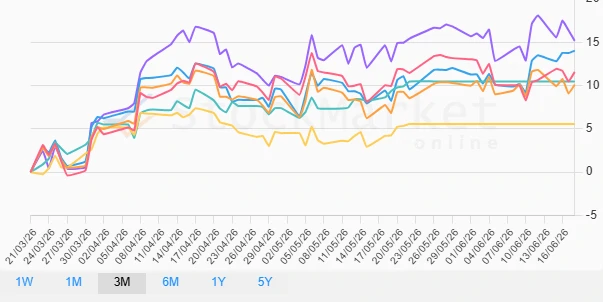
EU Countries Performance Three Months
| Country | Performance (%) | Performance |
|---|---|---|
| Poland | 15.19 | |
| Spain | 14.02 | |
| German | 11.56 | |
| Swiss | 10.48 | |
| France | 10.08 | |
| Great Britain | 5.56 |
Summary
🔍 In the short term (1 week), volatility is pronounced with Poland's significant decline contrasting with Germany's modest gains. Over a month, Spain emerges as a leader, maintaining its positive trajectory into the longer 3-month timeframe, along with outstanding performances from Poland and Germany. These trends highlight the resilience of Southern and Eastern European markets in the recent quarter. ✅ Investors should consider diversifying across emerging European markets, capitalizing on the momentum in sectors driving these countries' economic engines.
Smart Data Insight
Master the Perfect Entry & Exit for this Stock
Don't leave your profits to chance. Historically, this stock follows specific seasonal patterns that institutional traders use to maximize returns.
- ✅ Identify the "Golden Buying Window"
- ✅ Avoid high-risk correction cycles
- ✅ Backtested data from the last 20+ years