
April 17, 2026 a 03:31 pm


EU Countries - Performance Analysis
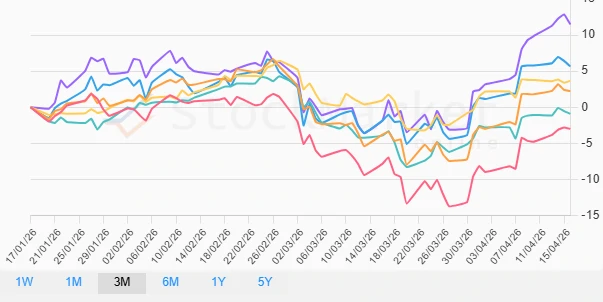
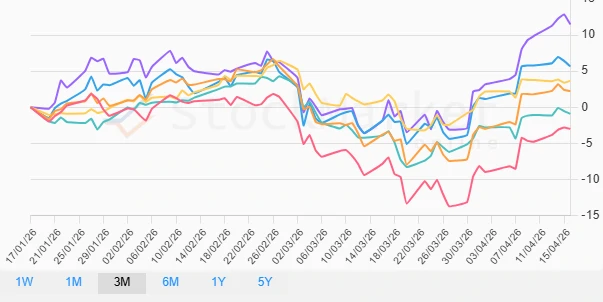
📊 The performance of European countries' indices over the past three timeframes shows an intricate web of economic progression. While some economies demonstrate resilience and steady growth, others indicate slight contractions. Such performance metrics are indicative of broader economic policies, market sentiments, and regional factors influencing these markets.
EU Countries Performance One Week
| Country | Performance (%) | Performance |
|---|---|---|
| German | 1.78 | |
| Poland | 1.65 | |
| France | 0.46 | |
| Swiss | 0.16 | |
| Great Britain | -0.10 | |
| Spain | -0.11 |
EU Countries Performance One Month
| Country | Performance (%) | Performance |
|---|---|---|
| Poland | 12.81 | |
| Spain | 7.72 | |
| France | 6.90 | |
| German | 6.27 | |
| Swiss | 3.98 | |
| Great Britain | 2.85 |
EU Countries Performance Three Months
| Country | Performance (%) | Performance |
|---|---|---|
| Poland | 11.51 | |
| Spain | 5.68 | |
| Great Britain | 3.67 | |
| France | 2.24 | |
| Swiss | -0.91 | |
| German | -3.00 |
Summary
💡 Overall, the European markets have exhibited varying degrees of performance over different timeframes. Poland stands out as the consistent leader, especially in the one-month and three-month periods, suggesting strong economic policies and favorable market conditions. Conversely, Germany, despite its economic robustness, shows mixed signals, with short-term gains overshadowed by longer-term challenges. As Europe faces complex economic challenges, investors should remain vigilant, primarily focusing on markets with robust policy frameworks and positive growth prospects.
Smart Data Insight
Master the Perfect Entry & Exit for this Stock
Don't leave your profits to chance. Historically, this stock follows specific seasonal patterns that institutional traders use to maximize returns.
- ✅ Identify the "Golden Buying Window"
- ✅ Avoid high-risk correction cycles
- ✅ Backtested data from the last 20+ years