
August 14, 2026 a 03:31 pm

EU Countries - Performance Analysis
📊 The recent performance analysis of European markets unveils intriguing dynamics over multiple timeframes: 1 week, 1 month, and 3 months. Diverse political and economic factors have undoubtedly influenced these results. By analyzing these key figures, stakeholders can gain a deeper understanding of the trends driving regional performance.
EU Countries Performance One Week
| Country | Performance (%) | Performance |
|---|---|---|
| Spain | 0.01 | |
| Great Britain | 0.0 | |
| Swiss | 0.0 | |
| German | -0.21 | |
| Poland | -0.51 | |
| France | -1.11 |
EU Countries Performance One Month
| Country | Performance (%) | Performance |
|---|---|---|
| Poland | 7.00 | |
| German | 6.01 | |
| Spain | 5.15 | |
| France | 4.18 | |
| Great Britain | 0.0 | |
| Swiss | 0.0 |
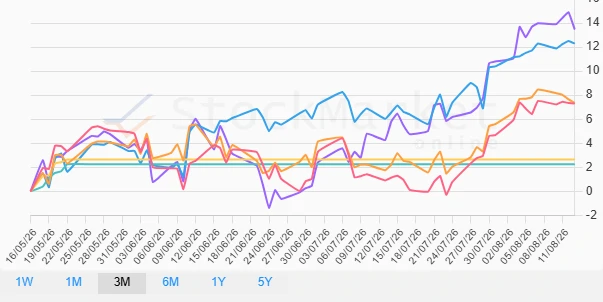
EU Countries Performance Three Months
| Country | Performance (%) | Performance |
|---|---|---|
| Poland | 13.47 | |
| Spain | 12.30 | |
| France | 7.36 | |
| German | 7.31 | |
| Great Britain | 2.64 | |
| Swiss | 2.25 |
Summary
✅ Across all timeframes, Poland has emerged as a leader, especially noticeable with a substantial 13.47% rise over three months. Spain also shows a noteworthy upward trajectory. However, short-term fluctuations highlight disparities, as France's brief dip contrasts its longer-term resilience. The stable yet stagnant performance of Great Britain and Swiss prompts a focus on sustaining growth. Overall, opportunities abound, demanding strategic alignment with growth regions without ignoring potential volatility. Diversification based on temporal market shifts could prove beneficial for portfolio robustness.
Smart Data Insight
Master the Perfect Entry & Exit for this Stock
Don't leave your profits to chance. Historically, this stock follows specific seasonal patterns that institutional traders use to maximize returns.
- ✅ Identify the "Golden Buying Window"
- ✅ Avoid high-risk correction cycles
- ✅ Backtested data from the last 20+ years