
November 13, 2026 a 03:31 pm


EU Countries - Performance Analysis
In the recent weeks, European financial markets have demonstrated significant variability. While certain countries have shown robust performance, others are trailing behind. Our analysis delves into these performances over three key periods: one week, one month, and three months. This provides a comprehensive view of regional economic resilience and investor sentiment within the European Union. Key insights reveal the shifting dynamics and emergent trends in the region's financial landscape.
EU Countries Performance One Week 📊
| Country | Performance (%) | Performance |
|---|---|---|
| Spain | 3.10 | |
| German | 2.94 | |
| Poland | 2.68 | |
| France | 2.19 | |
| Great Britain | 0.00 | |
| Swiss | 0.00 |
EU Countries Performance One Month 📈
| Country | Performance (%) | Performance |
|---|---|---|
| France | 5.63 | |
| German | 4.65 | |
| Spain | 3.19 | |
| Poland | 0.07 | |
| Great Britain | 0.00 | |
| Swiss | 0.00 |
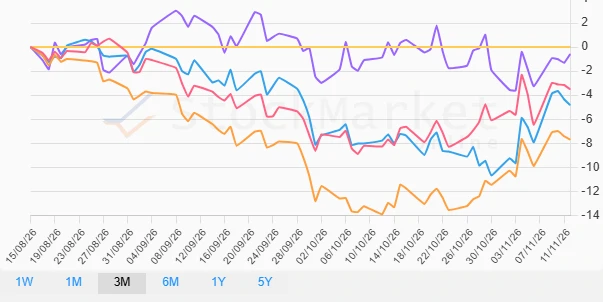
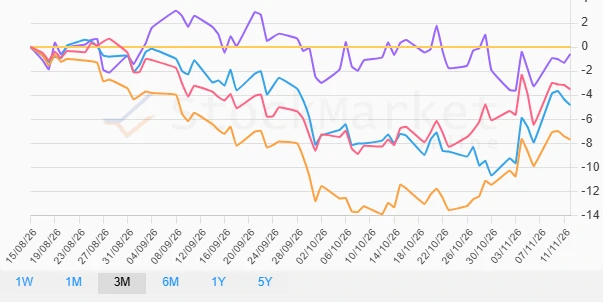
EU Countries Performance Three Months 📉
| Country | Performance (%) | Performance |
|---|---|---|
| Great Britain | 0.00 | |
| Swiss | 0.00 | |
| Poland | -0.58 | |
| German | -3.51 | |
| Spain | -4.82 | |
| France | -7.69 |
Summary 🗣️
Throughout varying time horizons, the data underscores a fluctuating European market landscape. While Spain and France have shown strong short-term gains, France's three-month setback emphasizes the region's vulnerability to market shifts. Germany and Poland maintain moderate growth but are not immune to longer-term declines. As the markets progress, stakeholders must strategize with an eye on volatility, particularly in global and regional macroeconomic contexts. Such analysis proves crucial for informed decision-making, ensuring adaptable investment strategies are employed to navigate the complexities of the European market.
Smart Data Insight
Master the Perfect Entry & Exit for this Stock
Don't leave your profits to chance. Historically, this stock follows specific seasonal patterns that institutional traders use to maximize returns.
- ✅ Identify the "Golden Buying Window"
- ✅ Avoid high-risk correction cycles
- ✅ Backtested data from the last 20+ years