
October 02, 2026 a 03:31 pm

EU Countries - Performance Analysis
This performance analysis of key European countries reveals crucial insights into the short-term volatility and long-term trends across distinct timeframes. Over the course of the last week, month, and three months, the fortunes of these economies have varied significantly, reflecting broader economic conditions and geopolitical impacts. This report aims to distill these movements into a coherent narrative, identifying outperformers and underperformers that define the current European financial landscape.
EU Countries Performance One Week 📊
| Country | Performance (%) | Performance |
|---|---|---|
| Great Britain | 0.0% | |
| Swiss | 0.0% | |
| Poland | -3.59% | |
| German | -3.62% | |
| France | -4.96% | |
| Spain | -5.57% |
EU Countries Performance One Month 📈
| Country | Performance (%) | Performance |
|---|---|---|
| Great Britain | 0.0% | |
| Swiss | 0.0% | |
| Poland | -1.92% | |
| German | -6.57% | |
| Spain | -6.65% | |
| France | -8.78% |
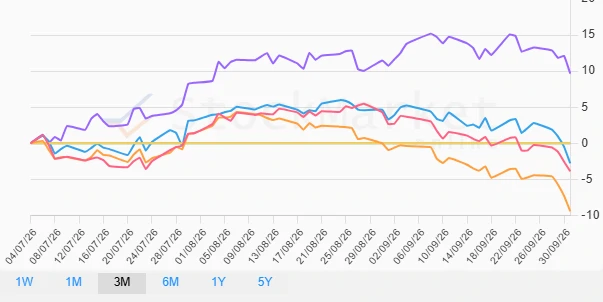
EU Countries Performance Three Months 📉
| Country | Performance (%) | Performance |
|---|---|---|
| Poland | 9.70% | |
| Great Britain | 0.0% | |
| Swiss | 0.0% | |
| Spain | -2.75% | |
| German | -3.86% | |
| France | -9.39% |
Summary 💡
The performance analysis paints a varied picture across the different timeframes. Over the short term, Spain and France have notably underperformed, whereas Poland has shown resilience, especially in the three-month span with a notable 9.70% growth. Great Britain and Switzerland have maintained stable positions with no significant performance changes. Given these trends, Poland appears as a region of interest for short-term investments, while the persistence of declines in key economies like Germany and France suggests caution. Investors should remain vigilant of macroeconomic indicators and geopolitical factors affecting these national economies.
Smart Data Insight
Master the Perfect Entry & Exit for this Stock
Don't leave your profits to chance. Historically, this stock follows specific seasonal patterns that institutional traders use to maximize returns.
- ✅ Identify the "Golden Buying Window"
- ✅ Avoid high-risk correction cycles
- ✅ Backtested data from the last 20+ years