
March 02, 2026 a 03:43 pm
CPB: Fundamental Ratio Analysis - Campbell Soup Company
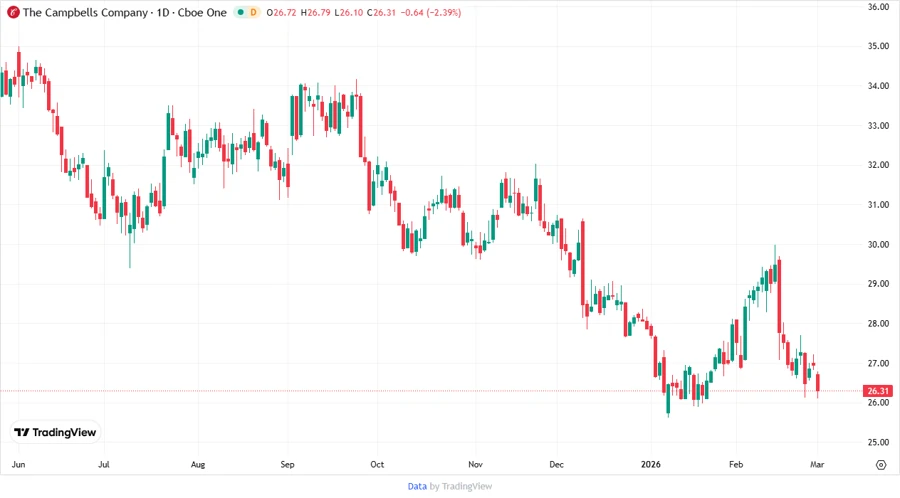
Campbell Soup Company maintains a strong presence in both Meals & Beverages and Snacks segments, serving the US and international markets. The stock represents a stable investment opportunity in the consumer defensive sector, with a focus on packaged foods. Evaluating its fundamental ratios helps gauge its financial health and market expectations.
Fundamental Rating
The current fundamental rating for Campbell Soup Company stands at B+, indicating a sound financial foundation but with room for improvement.
| Category | Score (1-5) | Score Visual |
|---|---|---|
| Discounted Cash Flow | 5 | |
| Return On Equity | 4 | |
| Return On Assets | 3 | |
| Debt To Equity | 1 | |
| Price To Earnings | 3 | |
| Price To Book | 2 |
Historical Rating
The historical data provides insight into the company's performance over time, allowing investors to identify trends.
| Date | Overall Score | DCF | ROE | ROA | D/E | P/E | P/B |
|---|---|---|---|---|---|---|---|
| 2026-02-27 | 3 | 5 | 4 | 3 | 1 | 3 | 2 |
| Historical Date | 0 | 5 | 4 | 3 | 1 | 3 | 2 |
Analyst Price Targets
The price target range sheds light on market expectations for Campbell Soup Company's future stock performance.
| High | Low | Median | Consensus |
|---|---|---|---|
| $38 | $26 | $30 | $29.8 |
Analyst Sentiment
Analyst sentiments are crucial in understanding the market's perspective on buying, holding, or selling the stock.
| Recommendation | Number | Visual |
|---|---|---|
| Strong Buy | 0 | |
| Buy | 3 | |
| Hold | 17 | |
| Sell | 8 | |
| Strong Sell | 0 |
Conclusion
Campbell Soup Company represents a solid investment within the consumer defensive sector, appealing to conservative investors seeking stability. While the fundamental ratings are satisfactory, the company's high debt to equity ratio poses a potential risk. Analyst sentiments highlight a general consensus to hold, with price targets indicating modest growth potential. As the company continues to navigate industry challenges, long-term prospects depend significantly on its ability to manage debt and capitalize on market opportunities.
Smart Data Insight
Master the Perfect Entry & Exit for this Stock
Don't leave your profits to chance. Historically, this stock follows specific seasonal patterns that institutional traders use to maximize returns.
- ✅ Identify the "Golden Buying Window"
- ✅ Avoid high-risk correction cycles
- ✅ Backtested data from the last 20+ years