
February 10, 2026 a 06:00 pm

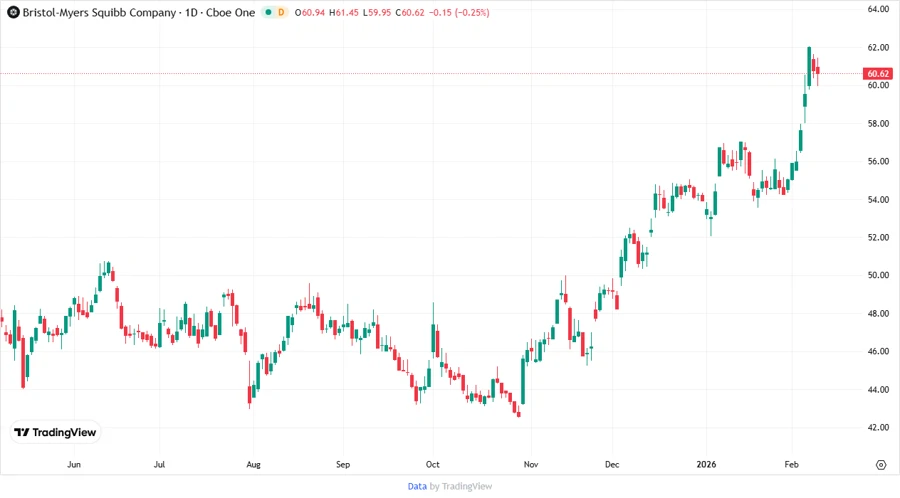
BMY: Fundamental Ratio Analysis - Bristol-Myers Squibb Company
Bristol-Myers Squibb, a titan in the biopharmaceutical industry, continues to lead with its innovative portfolio addressing a range of critical health concerns, including hematology and oncology. Positioned strongly in its sector, the company's robust R&D pipeline reinforces its potential for sustainable growth. Investors should weigh the company's historical resilience against market fluctuations.
Fundamental Rating
This rating demonstrates Bristol-Myers Squibb's strong financial health and potential. The company showcases high performance in critical areas while maintaining a reliable overall score of 4.
| Category | Score | Visualization |
|---|---|---|
| Discounted Cash Flow | 5 | |
| Return on Equity | 4 | |
| Return on Assets | 5 | |
| Debt to Equity | 1 | |
| Price to Earnings | 3 | |
| Price to Book | 3 |
Historical Rating
The historical performance provides insight into the company's consistent fundamentals over time.
| Date | Overall | DCF | ROE | ROA | Debt to Equity | P/E | P/B |
|---|---|---|---|---|---|---|---|
| 2026-02-10 | 4 | 5 | 4 | 5 | 1 | 3 | 3 |
| Previous Date | 0 | 5 | 4 | 5 | 1 | 3 | 3 |
Analyst Price Targets
Analyst targets offer a guideline on the expected market performance for the stock, with a median consensus offering realistic investment expectations.
| High | Low | Median | Consensus |
|---|---|---|---|
| 72 | 40 | 60 | 60.11 |
Analyst Sentiment
The sentiment reflects the cautious optimism of analysts, with a strong leaning towards 'Hold', suggesting potential stability or transition.
| Recommendation | Count | Visualization |
|---|---|---|
| Strong Buy | 0 | |
| Buy | 19 | |
| Hold | 20 | |
| Sell | 2 | |
| Strong Sell | 0 |
Conclusion
Bristol-Myers Squibb presents a solid investment opportunity in the biopharmaceutical landscape, given its robust portfolio and strong market positioning. While its debt-to-equity ratio is a point of caution, the consistent scores in discounted cash flow and assets are reassuring. The 'Hold' consensus from analysts highlights market stability and potential. Investors should consider both the potential high returns and inherent risks associated with sector volatility.