
June 25, 2025 a 12:32 pm


Asia Countries - Performance Analysis
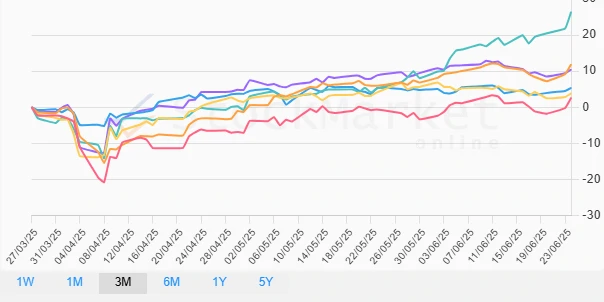
📊 Asia's markets have shown varied performances across different timeframes. This analysis aims to identify top performers and underperformers over the past week, month, and three months, shedding light on emerging trends and offering insights for informed investment decisions. While South Korea consistently leads across all periods, Japan's underperformance warrants attention. Evaluating these trends can guide strategic investment opportunities in the Asian markets.
Asia Countries Performance One Week
| Country | Performance (%) | Performance |
|---|---|---|
| South Korea | 6.92 | |
| China | 3.77 | |
| Hong Kong | 3.55 | |
| India | 1.94 | |
| Australia | 0.75 | |
| Japan | -0.41 |
Asia Countries Performance One Month
| Country | Performance (%) | Performance |
|---|---|---|
| South Korea | 21.25 | |
| Hong Kong | 5.98 | |
| China | 3.26 | |
| Australia | 1.62 | |
| India | 0.05 | |
| Japan | -0.28 |
Asia Countries Performance Three Months
| Country | Performance (%) | Performance |
|---|---|---|
| South Korea | 26.45 | |
| Hong Kong | 11.91 | |
| Australia | 10.44 | |
| India | 5.36 | |
| Japan | 3.82 | |
| China | 2.61 |
Summary
✅ South Korea stands out with superior growth across all observed timeframes, emphasizing its robust market momentum. Hong Kong and Australia also display strong positive trends, albeit to a lesser extent. However, Japan's negative performance in short-term analysis could signal structural challenges or transient economic issues. Investors should consider aligning their portfolios by capitalizing on South Korea's growth trajectory and monitoring Japan for potential recovery opportunities. Close scrutiny is advised for dynamic shifts in these markets to leverage future growth effectively.
Smart Data Insight
Master the Perfect Entry & Exit for this Stock
Don't leave your profits to chance. Historically, this stock follows specific seasonal patterns that institutional traders use to maximize returns.
- ✅ Identify the "Golden Buying Window"
- ✅ Avoid high-risk correction cycles
- ✅ Backtested data from the last 20+ years