
June 03, 2026 a 12:31 pm


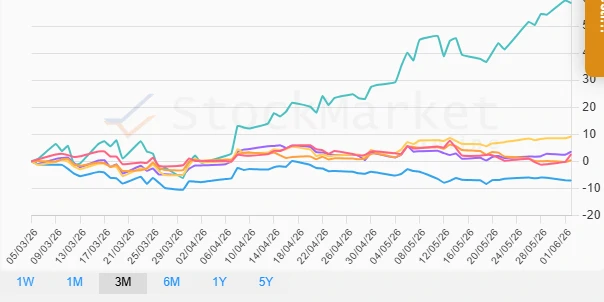

Asia Countries - Performance Analysis
Asian markets have shown a varied performance across different timeframes, revealing intriguing trends and opportunities. South Korea emerges as a standout performer across multiple periods, while India faces challenges. These patterns offer insights into the dynamic shifts occurring within the Asian economic landscape.
Asia Countries Performance One Week 📊
| Country | Performance (%) | Performance |
|---|---|---|
| South Korea | 8.10 | |
| China | 2.96 | |
| Australia | 1.87 | |
| Japan | 1.39 | |
| Hong Kong | 0.31 | |
| India | -0.80 |
Asia Countries Performance One Month 📈
| Country | Performance (%) | Performance |
|---|---|---|
| South Korea | 29.28 | |
| Japan | 6.10 | |
| Australia | 2.18 | |
| China | -0.29 | |
| Hong Kong | -1.07 | |
| India | -1.83 |
Asia Countries Performance Three Months 📈
| Country | Performance (%) | Performance |
|---|---|---|
| South Korea | 58.49 | |
| Japan | 9.20 | |
| Australia | 3.59 | |
| China | 2.66 | |
| Hong Kong | 0.42 | |
| India | -7.09 |
Summary 💡
South Korea has demonstrated outstanding growth across each timeframe, establishing itself as the leading market performer in Asia. Japan shows strong momentum particularly in longer-term analysis, while Australia's consistent performance supports its stable economic position. Conversely, India has consistently lagged, indicating potential underlying challenges. These results highlight the vibrant and diverse economic conditions present within the Asian continent, offering both challenges and opportunities for investors.
Smart Data Insight
Master the Perfect Entry & Exit for this Stock
Don't leave your profits to chance. Historically, this stock follows specific seasonal patterns that institutional traders use to maximize returns.
- ✅ Identify the "Golden Buying Window"
- ✅ Avoid high-risk correction cycles
- ✅ Backtested data from the last 20+ years