
January 19, 2026 a 07:43 am

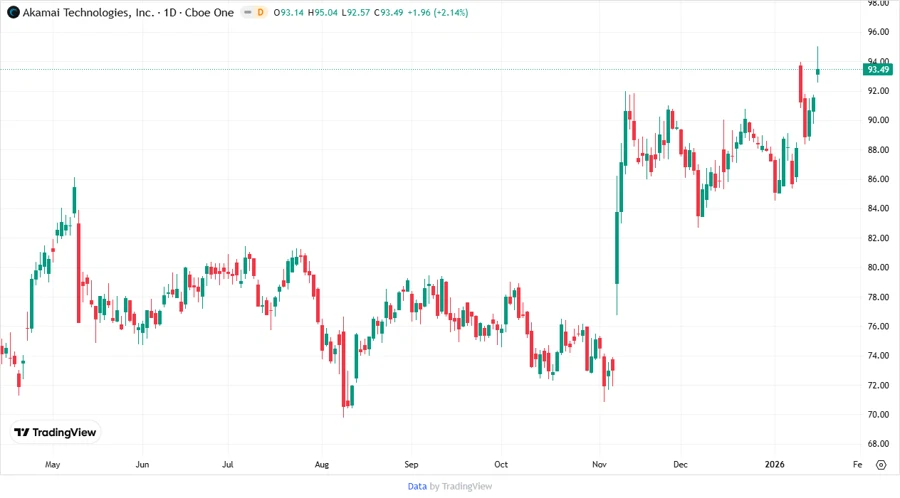
AKAM: Fundamental Ratio Analysis - Akamai Technologies, Inc.
Akamai Technologies, Inc. operates within a robust and growing industry, offering vital cloud and cybersecurity services that are crucial for both individual and business security in the digital age. The company demonstrates a stable business model, benefiting from a wide range of services including media delivery and edge computing solutions. Despite challenges, the company's consistent focus on security and performance optimization positions it favorably in the market.
Fundamental Rating
Current ratings indicate a moderate performance with room for growth, as evidenced by a combination of varied fundamental scores.
| Category | Score | |
|---|---|---|
| Discounted Cash Flow | 5 | |
| Return On Equity | 3 | |
| Return On Assets | 3 | |
| Debt To Equity | 1 | |
| Price To Earnings | 2 | |
| Price To Book | 3 |
Historical Rating
The historical scores give insights into performance trends over time, showcasing stability in fundamental areas with slight variations.
| Date | Overall Score | DCF | ROE | ROA | D/E | P/E | P/B |
|---|---|---|---|---|---|---|---|
| 2026-01-16 | 3 | 5 | 3 | 3 | 1 | 2 | 3 |
| Previous | 0 | 5 | 3 | 3 | 1 | 2 | 3 |
Analyst Price Targets
Analyst forecasts suggest variability with potential max values reaching significant new highs, endorsing the stock as a Hold.
| High | Low | Median | Consensus |
|---|---|---|---|
| 115 | 89 | 105 | 104.8 |
Analyst Sentiment
The general market sentiment from analysts reflects a balanced outlook with the majority suggesting to hold the stock.
| Recommendation | Count | |
|---|---|---|
| Strong Buy | 1 | |
| Buy | 24 | |
| Hold | 25 | |
| Sell | 2 | |
| Strong Sell | 0 |
Conclusion
Akamai Technologies, Inc. demonstrates a strong positioning in the cloud services sector with potential for steady growth and inherent resilience against cyber threats. While the fundamental ratings reveal moderate scores, this is balanced by a favorable market environment and robust service offerings. The stock remains a stable choice with consistent analyst support for holding. Potential high value targets indicate room for upward price movement, though competition and technological advancements continue to present key risks.